Updated April 22, 2026
Your First DivaDance Class: What to Expect (From Someone Who Was Terrified)
You've been thinking about trying dance classes for beginners. Here's exactly what your first DivaDance class looks like, from the moment you walk in to the moment you walk out wishing you'd come sooner.
Let's be honest about what happens in the days before a first dance class. The mental spiral. The questions. What if I'm the worst one there? What if I can't keep up? What if everyone already knows each other and I'm the obvious outsider?
These are normal thoughts. Everyone who has ever walked into their first DivaDance class has had some version of them. And everyone who has walked back out the other side says the same thing: the fear was completely disproportionate to the reality.
DivaDance has been running beginner-friendly dance classes since 2015, with classes in 50+ cities across the country. Nearly half of the people who walk into a DivaDance class have never taken a formal dance class, and more than 95% aren’t currently training as dancers. That is based on responses from almost 10,000 new DivaDance members. The anticipation is worse than the thing itself, and the data backs that up.
Here's exactly what your first class looks like, so you can put the spiral down and just show up.
What to Expect Before Your First Dance Class
All you need is athletic wear, supportive sneakers, a water bottle, and a willingness to try something. You don't need to know any dances in advance. You don't need to be in a particular fitness condition. You don't need to be coordinated.
If you want to arrive a few minutes early, that's a great call. It gives you a moment to get oriented, maybe meet the instructor, and settle your nerves before the music starts.
What to Wear to Your First Dance Class
The DivaDance dress code is minimal on purpose. Overthinking it makes the nerves worse.
- Athletic wear you can move in. Leggings, shorts, a tee, a tank. Nothing that will ride up or need adjusting mid-class.
- Supportive sneakers you can pivot in. Not brand new (blisters). Not running shoes (too much grip). Cross-trainers or dance sneakers are ideal.
- A water bottle. You will sweat.
You don’t need dance shoes. You don’t need a leotard. You don’t need anything special. Most instructors dress the same way members do: leggings, a tee, and sneakers they’ve broken in.
Confidence and Community
Every DivaDance class is built around two words: Confidence and Community. Your instructor will say this at the top, and then tell you what it actually means. Confidence means they're going to break everything down, give moves fun names so they stick in your brain, help your mind and body work as a team, and yes, you are going to sweat. Community means you'll be encouraged to connect with the people around you, not just dance near them.
That distinction matters. The U.S. Surgeon General's 2023 Advisory on Loneliness and Isolation found that approximately half of U.S. adults were already experiencing loneliness, and identified active participation in community activities as one of the strongest protective factors against isolation. DivaDance classes are designed around exactly that kind of active, in-person group experience.
Peter Lovatt, PhD, who founded the Dance Psychology Lab at the University of Hertfordshire in 2008, has spent more than 15 years researching what happens in the brain and body during group dance. His work, compiled in The Dance Cure (2021), points to measurable mental, emotional, and social benefits from the kind of collective movement a DivaDance class is built around.
Before the choreography starts, the instructor kicks off a quick community icebreaker. It's a simple prompt to get people talking to each other, especially someone they haven't met yet. It takes about a minute, it's low-pressure, and it does something important: by the time the music starts, you've already had a conversation with somebody. You're not a stranger in the room anymore.

What Happens in the Warm-Up
Every class starts with a warm-up: a few minutes of movement designed to get the body ready, the heart rate up, and the vibe established.
This is usually the moment when the nerves start to dissolve. The warm-up is intentionally accessible. The moves are simple enough that everyone can follow along immediately. The music is familiar. And you start to notice that you're not, in fact, the only person who looked a little uncertain when they walked in.
By the end of the warm-up, the room is already a completely different place than it was when you arrived. People are moving. The instructor is chatting with the room, keeping things loose and fun. You're already having a good time before the real choreography even starts.
How the Choreography Works for Beginners
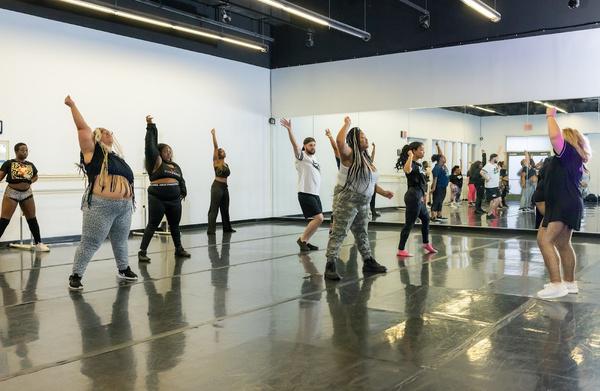
This is the heart of a DivaDance class. The instructor teaches a routine set to a full song, broken into small learnable sections. You learn a piece, you practice it, you layer the next piece on top.
But here's what makes DivaDance choreography different from watching a YouTube tutorial in your living room: the moves get fun names. Your instructor doesn't say "step ball change to a half pivot." They'll name the moves after whatever the song's about, so the cues are easy to remember and the learning process feels more like play than study. The eight-count makes sense because the story makes sense.
There's science behind why this works. Dr. Peter Lovatt, PhD, founder of the Dance Psychology Lab at the University of Hertfordshire and author of The Dance Cure (HarperOne, 2021), has spent over 20 years researching how dance affects the brain. His research has found that dancing can reduce anxiety, improve mood, and build self-confidence, even in people who describe themselves as non-dancers.
For beginners, the choreography portion can feel most intimidating to anticipate. But the reality is almost always different from the expectation. DivaDance instructors are specifically trained to make choreography accessible at every level. They break everything down, and they check in with you by name while they're teaching. You'll hear the instructor look over and say something like "How you doing over there, friend?" That's not a performance. That's how the room stays together.
Some moves you'll get on the first try. Some will take a few repetitions. Some might take the whole class, and that's fine, because nobody is grading you. Nobody is watching with a clipboard. The only metric that matters is whether you're moving and having fun, and both of those are achievable from your very first class.
The music matters enormously here. DivaDance playlists are built around songs people know and love. Current pop, R&B, hip-hop, throwbacks. When a song you love comes on, your body starts moving almost before your brain registers it. The choreography gets easier simply because your joy is doing half the work.
And somewhere in the middle of all this, the instructor will pause the teaching and have you go find somebody you haven't talked to yet and give them a high five. It sounds small. It changes the room.
The Finale Run-Through
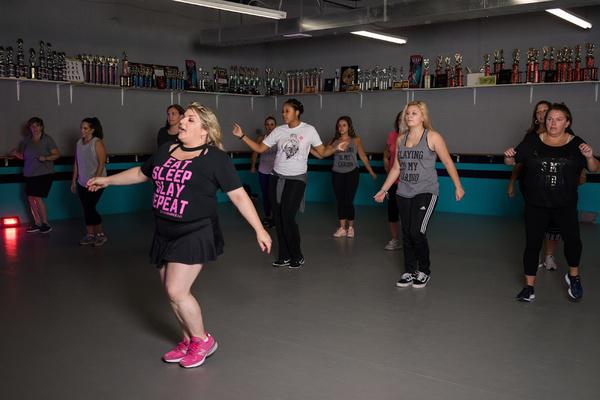
At the end of class, the group performs the full routine together. This is the moment first-timers consistently describe as their favorite part of the class, even though it's also the moment that sounds most daunting in advance.
Here's why it works: by the time you get to the finale, you've practiced enough that you actually know the routine. Not perfectly. Probably not perfectly. But enough. You and the people around you have been learning together, and there's a shared energy in that final run that feels genuinely triumphant.
Some people pull out their phones and record the run-through. The instructor encourages it: capture your confidence journey over time, see yourself dancing in real time, watch yourself improve week after week. A lot of people look back on that first video months later and can't believe how far they've come.
A lot of people look up during the finale and realize they've been smiling for the last fifteen minutes without noticing. That's the DivaDance finale. It doesn't matter if every move was technically perfect. It matters that you did it, together, and it felt incredible.
After Class
After the final song, a few things typically happen. People catch their breath. They smile at each other. There's often a round of applause for the instructor, for the group, for the moment.
And then the conversation starts. First-timers often describe the post-class energy as one of the most genuinely warm social experiences they've had in a long time. You've just done something together. That creates instant connection. People introduce themselves. Regulars welcome newcomers. The instructor checks in with anyone who came for the first time.
Most people who attend their first DivaDance class leave with plans to come back. Many of them have their next class booked before they even get to the car. That's not unusual. That's the typical outcome.
Ready to Stop Thinking About It and Just Go?
DivaDance has locations across the country, with classes at multiple times throughout the week. Find a location near you and book a spot in a beginner-friendly class.
The only thing standing between you and this experience is the decision to show up. Make it.
Frequently Asked Questions
What is DivaDance?
DivaDance is a dance fitness brand with classes in 50+ cities across the United States, offering group classes and private events for adults of all experience levels since 2015. Classes are set to popular music and taught in a welcoming, non-judgmental environment built around two things: Confidence and Community.
Do I need dance experience to take a DivaDance class?
No. Nearly half of DivaDance members have never taken a formal dance class, and more than 95% aren’t currently training as dancers, based on responses from almost 10,000 new DivaDance members. Classes are built for beginners and experienced dancers alike. Instructors break down choreography step by step, give moves fun names so they stick, and check in with you by name throughout class.
How long is a DivaDance class?
Most classes run 45 to 60 minutes, a format that has stayed consistent across 50+ cities since 2015. Class includes a warm-up, choreography broken down step by step, and a full run-through at the end.
What should I bring to my first DivaDance class?
Comfortable athletic clothing, supportive sneakers, and water. You will sweat. That's it.
Can I come to my first class alone?
Yes, and many people do. The class format is designed to build connection from the very first minute. Your instructor will run a quick icebreaker before choreography starts, and there are moments built into the class where you'll interact with the people around you. By the end, you won't feel like you came alone.
Data Sources
U.S. Surgeon General's Advisory: Our Epidemic of Loneliness and Isolation (U.S. Department of Health and Human Services, 2023). hhs.gov/surgeongeneral
Lovatt, P. The Dance Cure: The Surprising Science to Being Smarter, Stronger, Happier (HarperOne, 2021). Research conducted at the Dance Psychology Lab, University of Hertfordshire (est. 2008). peterlovatt.com