If You Are New To Movement
First time taking a dance or fitness class as an adult. The pace, the prompts, and the 75-minute length all assume you are starting fresh.
DanceRx is DivaDance's dance therapy-inspired wellness class. Seventy-five minutes of low-impact choreography set to lyrical music, paired with journaling, breathwork, and guided stillness. No prior dance experience needed. Built for adults who want movement to feel like self-care, not punishment.
DanceRx is a dance therapy-inspired wellness class. You will journal, stretch, learn a low-impact routine choreographed to lyrical music, breathe, and rest. It is seventy-five minutes designed to release stress through movement instead of producing it. No advanced dance skill required, no gym mentality, no feeling like you have to push through anything.
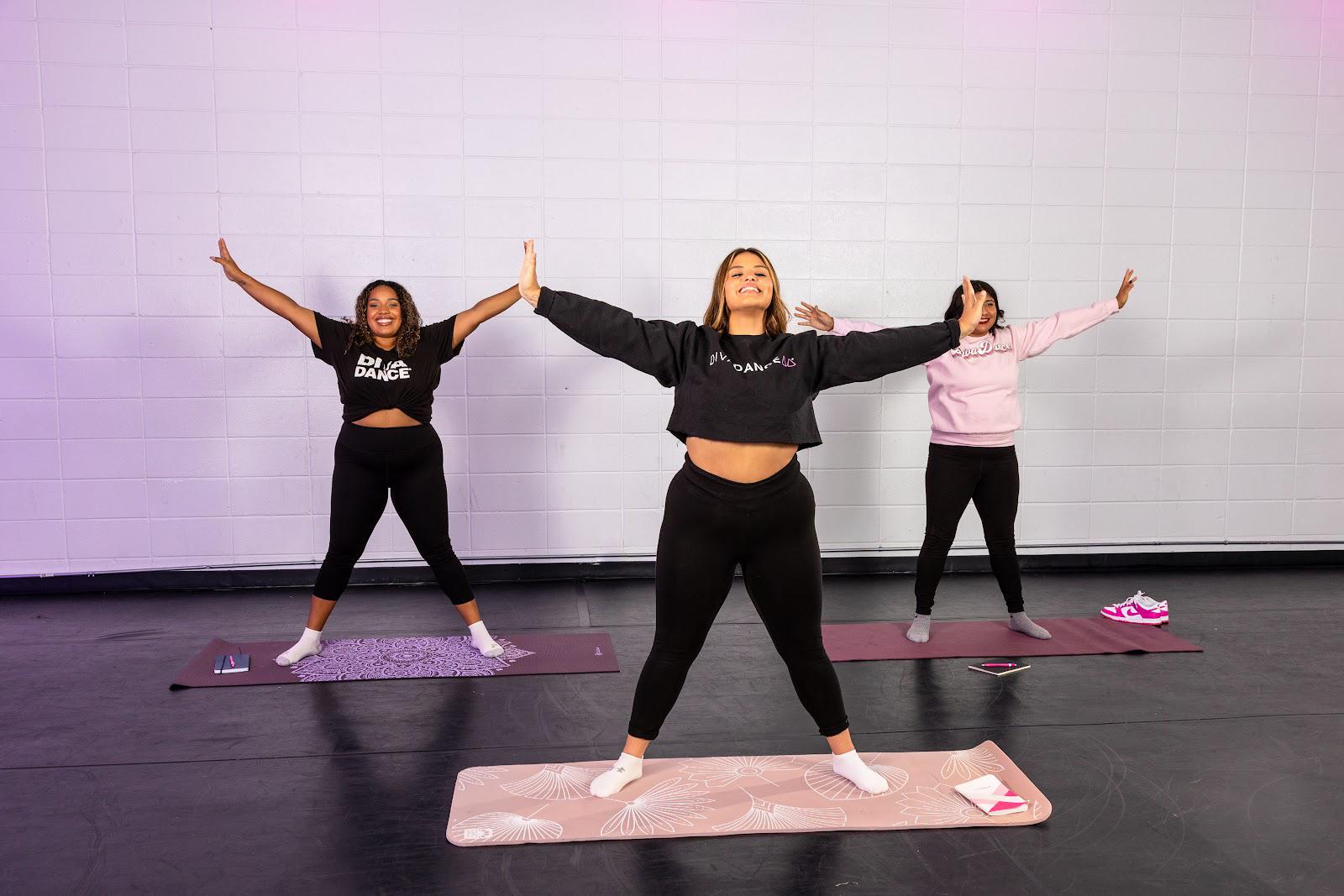
DanceRx is DivaDance's wellness-focused class format, built around dance therapy principles but designed as a movement practice rather than a clinical service. The class blends gentle choreography with guided self-reflection: a journal prompt at the top, a low-impact routine choreographed to lyrical music in the middle, breathwork and stillness at the end. The name is a play on "prescription," not a medical claim.
Important honesty note: DanceRx is dance therapy-inspired. It is not licensed Dance/Movement Therapy, which is a regulated mental health profession requiring board certification (BC-DMT). DanceRx instructors are trained DivaDance facilitators, not licensed therapists. If you need clinical mental health support, talk to a licensed provider. DanceRx is a complementary self-care practice that draws from the same body of research, not a replacement for therapy.
How A Class Flows
Every DanceRx class follows the same structure so you always know what to expect:
~10 minutes
A guided reflection themed to the weekly playlist. Reflective, not therapeutic homework. Notebook or phone works.
~10 minutes
A slower-paced version of the DivaDance warmup with stretch-and-hold sequences to ease the body in.
~35 minutes
A short, low-impact choreography inspired by the day’s theme. Endorphin release without the drain.
~10 minutes
Intentional breathing exercises to settle the nervous system after the movement portion. Pure stress relief.
~10 minutes
Guided floor rest, similar to savasana. Mindfulness in its simplest form. Actual rest. You time.
Short answer: yes, the research supports it. Multiple studies confirm that rhythmic movement to music reduces cortisol, releases endorphins, and improves mood regulation more reliably than non-musical exercise.
Randomized Trials · BMJ, 2024
A 2024 systematic review published in the BMJ found that dance interventions performed at least as well as established treatments for depression in randomized trials.
Source: Noetel et al., BMJ, February 2024 · meta-analysis of 218 randomized trials
What makes DanceRx specifically useful for mental wellness is the combination: the journaling builds emotional awareness, the inspired choreography offers release, and the breathwork plus stillness phases activate the parasympathetic nervous system for measurable stress relief. It is the same logic behind dance/movement therapy as a clinical practice, scaled to a group fitness format.
This is not a replacement for licensed mental health care. If you are managing depression, anxiety, trauma, or another condition, a DanceRx class is complementary, not curative. Talk to a clinician for the clinical work.
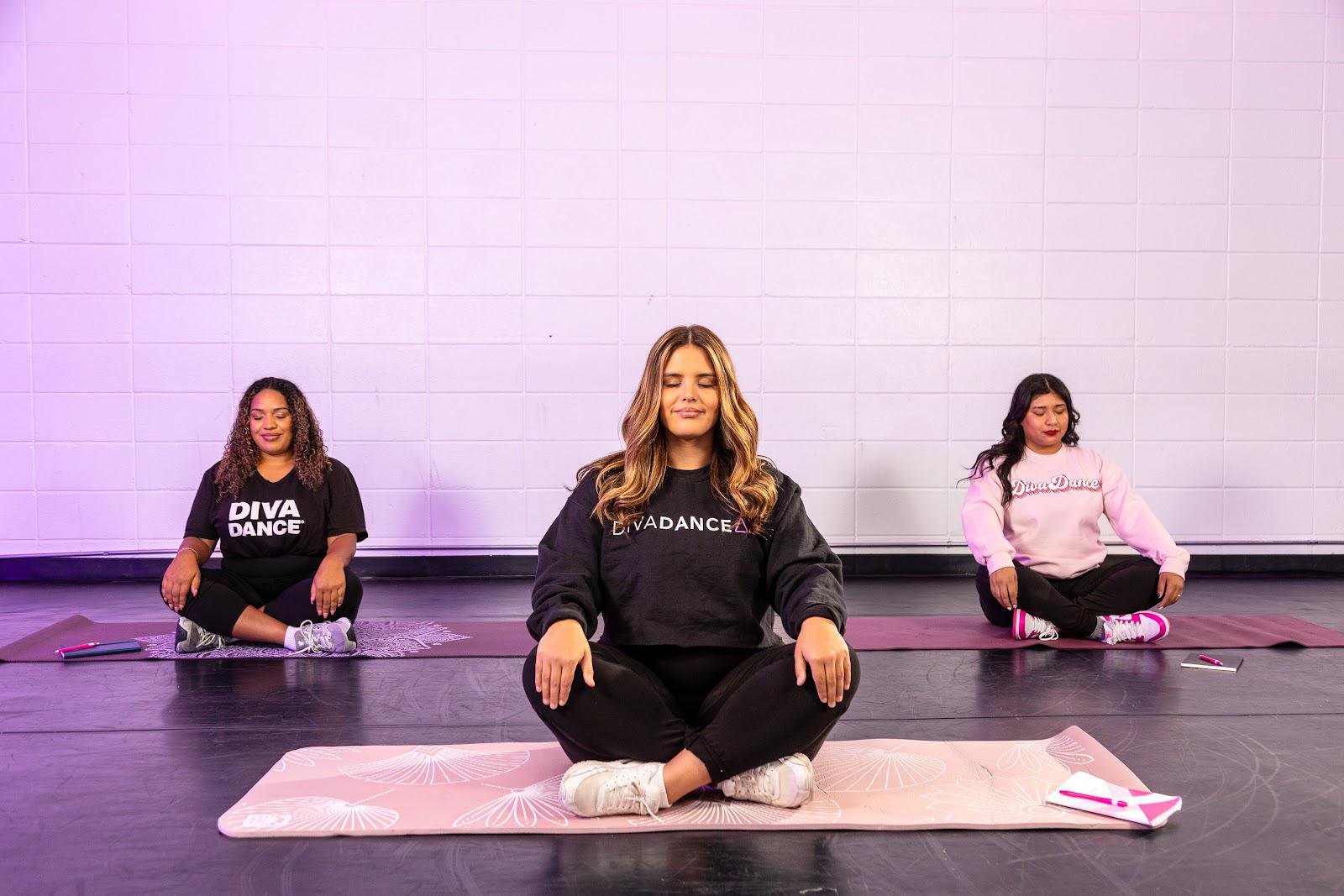
Yes. DanceRx is one of the most accessible adult dance fitness formats available. There are no jumps, no fast-paced cardio sequences, and no high-impact power moves. The choreography flows to lyrical music at a conversational pace, with options to simplify or sit out any movement.
Compared to other DivaDance formats: DivaDance NonStop is high-cardio follow-the-leader, and DivaDance Core is medium-intensity choreographed pop routines. DanceRx is the low-impact option in the lineup.
DanceRx works well for people in any of these situations:
If your goal is to sweat heavy or chase a high-intensity cardio session, NonStop is the better match.
People often ask how DanceRx compares to the other movement practices they have tried. Here is how to think about it:
Versus yoga: Yoga uses static and flowing postures with breath. DanceRx uses choreography with music. The internal experience overlaps (both can be meditative, both work the nervous system) but the movement vocabulary is completely different. Yoga tends to be quieter and more linear. DanceRx is set to pop and lyrical music and moves with it.
Versus therapy: Therapy is a licensed clinical relationship with a trained mental health provider. DanceRx is a group movement class. They serve different functions and one does not replace the other. Many DanceRx students see a therapist separately.
Versus licensed Dance/Movement Therapy: Dance/Movement Therapy (DMT) is a clinical practice provided by board-certified therapists, often one-on-one or in small clinical groups, sometimes covered by insurance for specific conditions. DanceRx is not DMT. It draws from the same research lineage but is structured as wellness programming, not treatment.
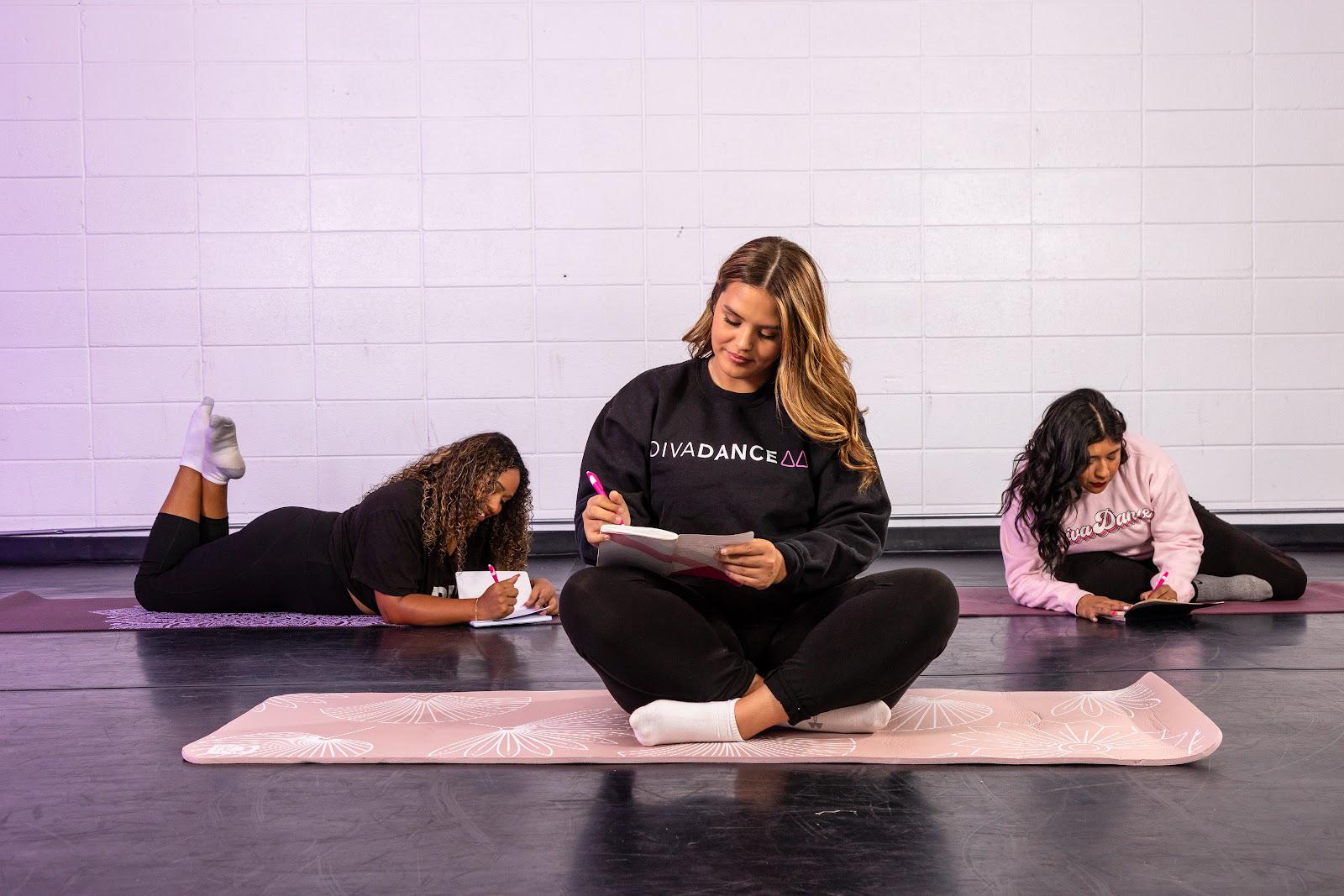
One of the most common things we hear from new DanceRx students: they came in wary of fitness classes because most of them feel like punishment. The yelled count-offs, the leaderboards, the "no excuses" energy. None of that lands when you are trying to recover from a hard week.
DanceRx is built on a different premise. Movement should feel like something you give yourself, not something you push through. The class will not shame you for taking it slow. The instructor will not call you out for sitting a phase out. The whole format is designed to leave you in a better state than you came in. That is the wellness logic of the class, and it is what 95.6% of our members (who have zero formal dance training) say keeps them coming back.
Is This For You?
DanceRx is built for adults 18+ of all bodies, all sizes, all genders, and all fitness levels. It works particularly well for:
First time taking a dance or fitness class as an adult. The pace, the prompts, and the 75-minute length all assume you are starting fresh.
Managing chronic stress, burnout, or a high-pressure life phase. Built-in breathwork and mindfulness phases lower cortisol on contact.
New job, new city, new relationship status, grief, perimenopause. The structure gives you something steady to come back to weekly.
You’re over the mirrors, the leaderboards, and the performance culture. DanceRx is structured movement without the score-keeping.
You have real movement goals, but the trending high-output workout leaves you wrecked. DanceRx delivers the cardio without the wreckage.
Low-impact movement keeps the cardio benefit without the pounding. Beginner-friendly stretching is built into every warmup.
It is not the right class for: anyone under 18, people seeking clinical therapeutic intervention (see a licensed provider), or anyone hoping for a high-intensity cardio session (try NonStop instead).
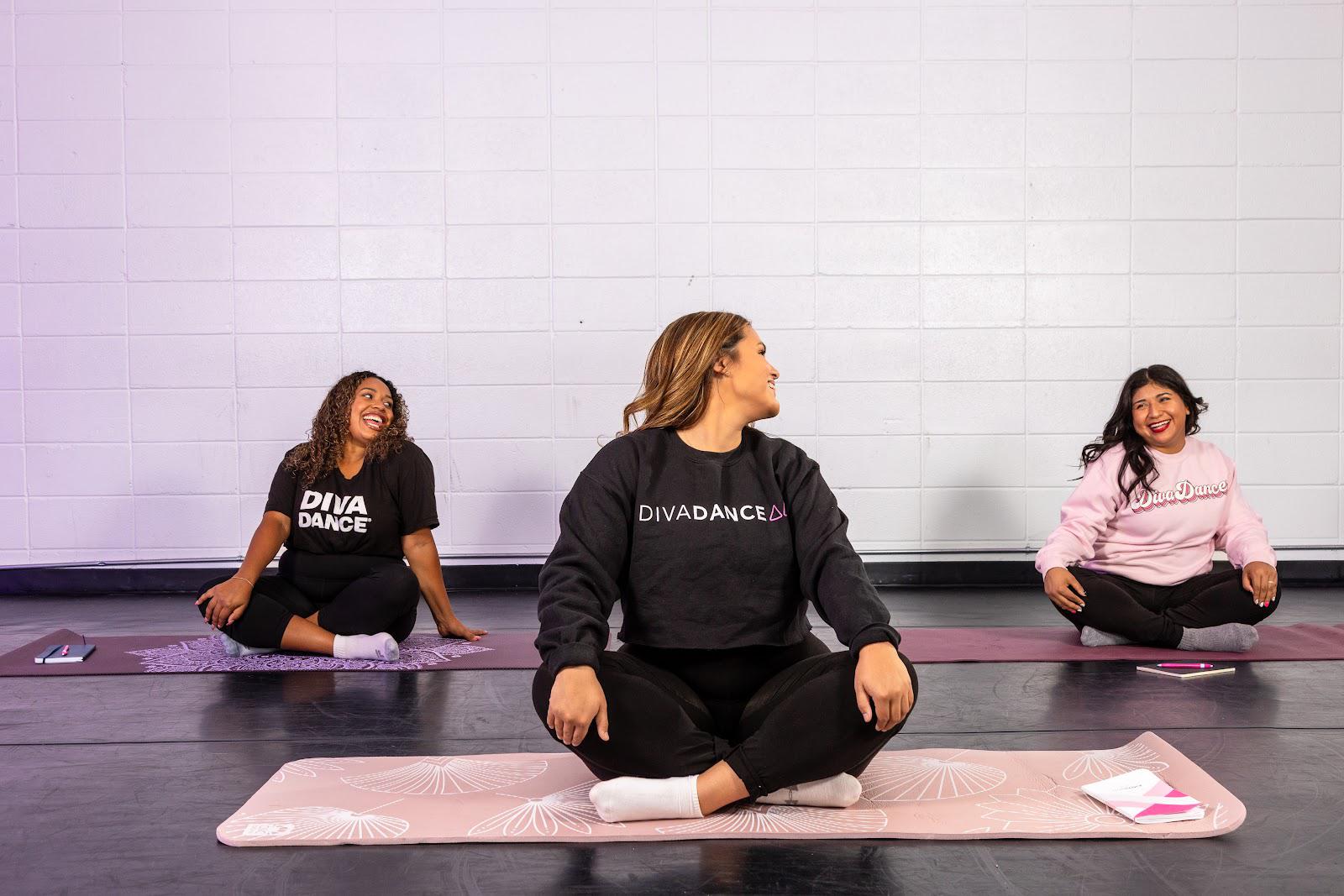
If you have never taken a DanceRx class, here is what your first one looks like in practice:
Pre-class anxiety is universal and has nothing to do with whether you will enjoy the class. Here is what your first DivaDance class actually feels like if you want the full play-by-play before you go.
DanceRx is meant to complement other movement and wellness practices, not replace them. Most students who come to DanceRx do other things alongside it: yoga, lifting, running, therapy, journaling on their own. The class works as a weekly reset that pairs well with whatever else you have got going.
If you are already in therapy, mention DanceRx to your therapist. Some clients find that the journaling prompts surface useful material to bring into their next session. If you are not in therapy and you think you might need to be, talk to a licensed provider. Movement helps with mood, but it is not a substitute for clinical care when clinical care is what is needed.
Reviews From the DivaDance Community

4.9
(452 Reviews)
I can’t say enough fabulous things about this place. The instructors are just the most genuinely kind and caring people, but they’re also FULL of sass, spicy dance moves, and positive vibes! I’m a big girl and I’m short, so I was worried about dancing at ...
Taylor Barnett
Fabi and Autumn were truly amazing during our diva dance class for my friends bachelorette! Many of us have never danced before and Autumn our instructor was so patient with us throughout the entire process. She took the time to explain the moves in ways we could easily remember. The ...
Jasmine McDonald
Honestly one of the best experienced I’ve ever had! I’m not much of a dancer myself but when I first joined the class I felt like I was in the right hands. They were really helpful teaching me new moves and giving me feedback, and at the same ...
vicky ballanti
Such a fun dance class! Great energy and vibes and choreo!
Nina Isabell
We had a blast with Baker at Diva Dance! This was such a fun bachelorette activity for girls who love to dance to fun music!
Poss Wedding
Best dance class I’ve ever taken! Autumn was an amazing instructor! And Fabi, the owner, was so kind and welcoming! I feel so included even though I’m not an experienced dancer. I loved the experience!
Emily Joyce
this place is fantastic! showed up for their “MJ slay session” and I will say the choreographer Ahlea did her THANG!!! I definitely felt MJ’s presence as we danced to- Workin day n night, PYT, and Slave to the rhythm. I recommend Diva dance to anyone, all ages and ...
sessy platt
I never imagined I'd be able to dance and feel confident. DIVA Dance has been a game-changer, and the best part has been the community and the instructors!
Isabella de la Llave
We had the best time at Diva Dance in Charleston for my sister’s bachelorette party! Baker is a fantastic instructor who made the routine fun, sassy and accessible for our group. Highly recommend for celebrations, even if you “don’t dance”! Thank you Baker!
Danielle Leopold Bogage
I just started taking some classes at Diva Dance and it’s been so much fun so far. As someone who used to dance, these classes feel so nostalgic to me— in the best way. It brings back a feeling that I’ve been missing for years and I am ...
Emily Hough