A low-impact cardio workout raises your heart rate while keeping at least one foot on the ground, so your joints never absorb the shock of jumping or running. Walking, swimming, cycling and dance cardio all qualify. Dance is the only one on that list with a soundtrack and a room full of people, and that matters: how much people enjoy an activity predicts whether they keep doing it (Rhodes et al., Annals of Behavioral Medicine, 2009).
If your knees have opinions about box jumps, you're coming back after a long break, or you just want cardio that doesn't feel like punishment, this guide is for you.
What is low-impact cardio?
Low-impact cardio is aerobic exercise where your feet don't leave the ground at the same time. High-impact cardio, like running or jumping jacks, sends repeated landing force through your ankles, knees and hips. Low-impact work skips the landing.
Low-impact cardio still takes real effort. Continuous, rhythmic movement can push your heart rate into the same moderate zone as a jog. What changes is how your joints feel the next morning.

Low-impact cardio workouts compared
Every option below counts as low impact. The best one is the one you'll repeat three times a week.
- Walking. Free and easy to start. Can get repetitive, and it's mostly solo.
- Swimming and water aerobics. Gentlest on joints. Needs pool access and a schedule that fits the pool's.
- Cycling or spin. Great for building endurance. Some people find the saddle and the leaderboard less fun.
- Rowing and elliptical. Full-body and efficient, though staring at a machine can feel like a chore.
- Dance cardio. Full-body movement, music you like and a room full of people. The routine keeps your brain busy, so an hour moves fast.
Is dance a good low-impact cardio workout?
Yes. Dance is moderate-intensity aerobic exercise, and the research backs it up. A 2018 meta-analysis in Sports Medicine found structured dance improved body composition, blood markers and musculoskeletal function about as well as other forms of physical activity.
The Physical Activity Guidelines for Americans recommend 150 minutes of moderate aerobic activity a week. Three hour-long dance classes covers it.
Dance and your brain
In a 21-year study of 469 adults over age 75, dancing was the only physical activity linked to a lower risk of dementia, with frequent dancers showing a 76% lower risk (Verghese et al., New England Journal of Medicine, 2003).
Can you lose weight with low-impact cardio?
You can, as part of a routine you keep up. Weight change depends on a lot more than one workout, including sleep, food and how consistently you move. Low-impact cardio helps because it's easier to do often and easier to recover from, so you're less likely to get hurt and quit.
If calorie numbers matter to you, a heart rate monitor beats any generic "calories per hour" chart. Bodies vary too much for a single figure to mean much.
Can you do low-impact cardio every day?
Most healthy adults can do some low-impact cardio most days, because it puts less stress on joints than running or jumping. The federal guidelines suggest spreading activity across several days of the week.
Mixing formats helps. A dance class one day, a walk the next, a rest day when your body asks for one. If you have a heart condition, joint problem or recent injury, check with your doctor about what's right for you.
What low-impact dance looks like at DivaDance
You'll warm up, learn a routine in short sections, then run it with the music. Our choreography class is all-levels, and instructors offer variations so you can keep both feet grounded. DanceRx is a 75-minute self-care class that pairs lyrical choreography with breathwork, journaling and meditation. NonStop, our 45-minute follow-the-leader cardio dance party, is the higher-energy option. Some studios also run ICONS™, a six-week, low-impact dance program built for adults 55+ with joint-friendly moves and the music you grew up on. Check your local studio to see if it's on the schedule.
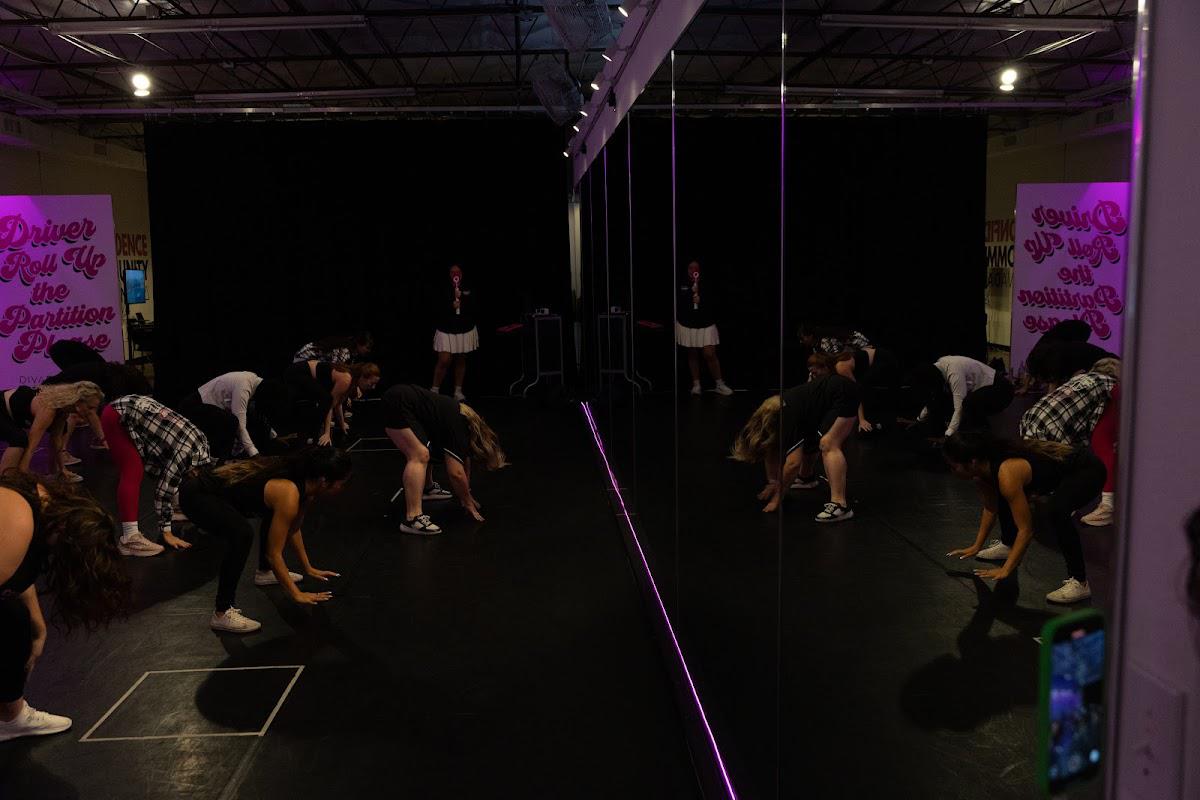
Nobody counts your reps, and nobody grades how high you jump, because you never have to jump. DivaDance is a dance class first, and the cardio comes with it. See the what to expect page before your first visit.
Who low-impact cardio is for
Most adults, honestly. It's especially useful if any of these sound like you:
- You're returning after a long break and want to rebuild without getting hurt.
- You have joint concerns or an old injury that rules out pounding.
- You're postpartum or in recovery and your provider has cleared you for low-impact cardio.
- You've never liked the gym. Dance gives you a reason to show up that a treadmill never will.
And you won't be the only newcomer. In surveys of more than 10,000 new DivaDance members, nearly half of those who answered had never taken a formal dance class.
How to start a low-impact cardio routine
Pick one or two formats you like, put them on the calendar three times a week, and adjust from there. Three hour-long sessions covers the 150-minute guideline. If dance is one of them, DivaDance® has 48 locations in 15 states, DC and Mexico; see the class formats and find your studio on the locations page.
Frequently asked questions
What is low impact cardio?
Low-impact cardio is aerobic exercise where at least one foot stays on the ground, so your joints skip the shock of jumping or running. Walking, swimming, cycling, rowing and dance cardio are all low impact.
Can you lose weight with low impact cardio?
Yes, as part of a consistent routine. Low-impact cardio is easier to do often and easier to recover from, which helps you keep going. Sleep, food and overall activity matter too.
Can you do low impact cardio every day?
Most healthy adults can do some low-impact cardio most days. The Physical Activity Guidelines for Americans recommend 150 minutes of moderate activity a week, spread across several days. Check with your doctor if you have a heart or joint condition.
Is low impact cardio good for bad knees?
Low-impact cardio skips the landing force of running and jumping, so many people with knee concerns find it easier to keep up. Check with your doctor about any recent injury, and tell your instructor what you're working around.
How much low impact cardio do you need a week?
The Physical Activity Guidelines for Americans recommend at least 150 minutes of moderate aerobic activity a week for adults. Three one-hour sessions covers it, and low-impact options all count.
Data sources
- Rhodes, R. E., Fiala, B., & Conner, M. (2009). "A review and meta-analysis of affective judgments and physical activity in adult populations." Annals of Behavioral Medicine.
- Fong Yan, A., et al. (2018). "The Effectiveness of Dance Interventions on Physical Health Outcomes Compared to Other Forms of Physical Activity." Sports Medicine.
- U.S. Department of Health and Human Services (2018). Physical Activity Guidelines for Americans, 2nd edition.
- Verghese, J., et al. (2003). "Leisure Activities and the Risk of Dementia in the Elderly." New England Journal of Medicine.
- DivaDance new member survey, more than 10,000 responses (April 2026).